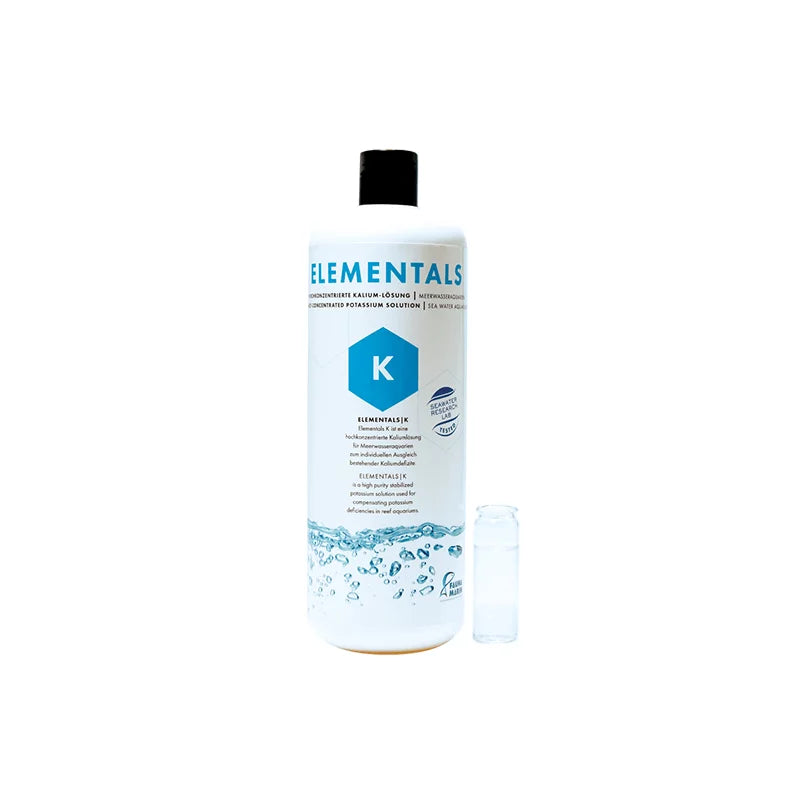
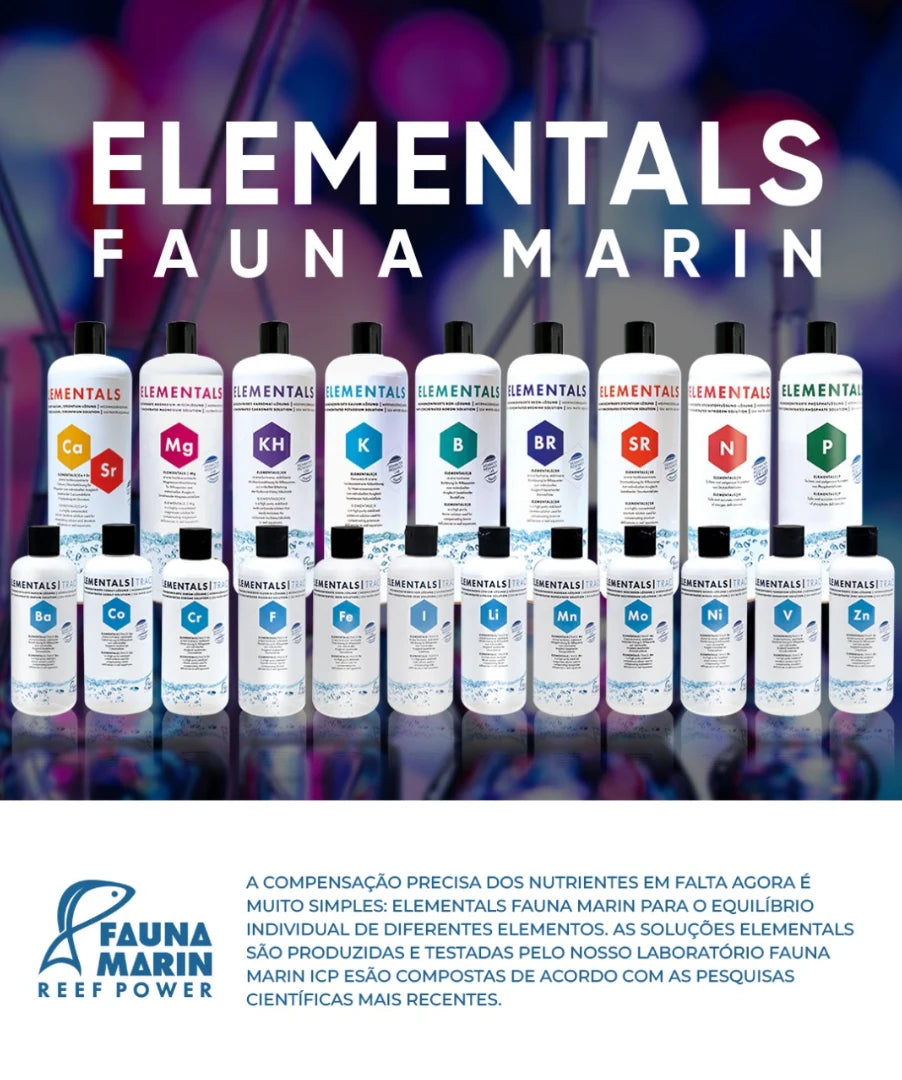
Potassium is one of the key elements for successful reef aquarists. Since it must be available in a suitable proportion at all times, it is also one of these important elements. Potassium is a macro element with importance for skeletal growth and cell function as well as nutrient conversion, but at the same time also a “fertilizer” for zooxanthellae. It is therefore important to keep the potassium value as stable as possible.
It is therefore contained in seawater in a comparable quantity to calcium, and it is no less important. The correct concentration in relation to the other macro elements is important for the successful aquarium care of corals. If you maintain a reef tank with mixed coral inhabitants and you use a high-quality brand salt mix to perform regular partial water changes of 10 percent per week, a potassium deficiency will very likely not appear.
What is it?
Potassium is a macro element that should always be set slightly below the calcium value (Ca value minus 20 mg/l). The optimum value is between 380 and 420 mg/l. Potassium is a nutrient and part of the supply process for corals and biofilms.
Problems:
Too low or too high potassium values disturb the nutrient turnover in the aquarium and have basically damaging influence on the coral growth as well as the colour formation.
Measures:
Regular control of the potassium value, observance of the salinity line, partial water change with Fauna Marin Professional Sea Salt as well as dosing via Elementals K. Due to the strongly varying consumption of the systems, individual dosing is advisable. The potassium value can be tested at home with the Aquahome Test K.
Indicator species:
The best indicator corals for potassium concentration are Acropora valida and the red Montipora with foliate growth. Acropora valida shows bright tissue and bright violet growth tips only if the potassium value is correct. The red Montipora quickly becomes pale with potassium deficiency and stops growing, recognizable by the lack of white growth margins.